
The Best Foods for Gut Health
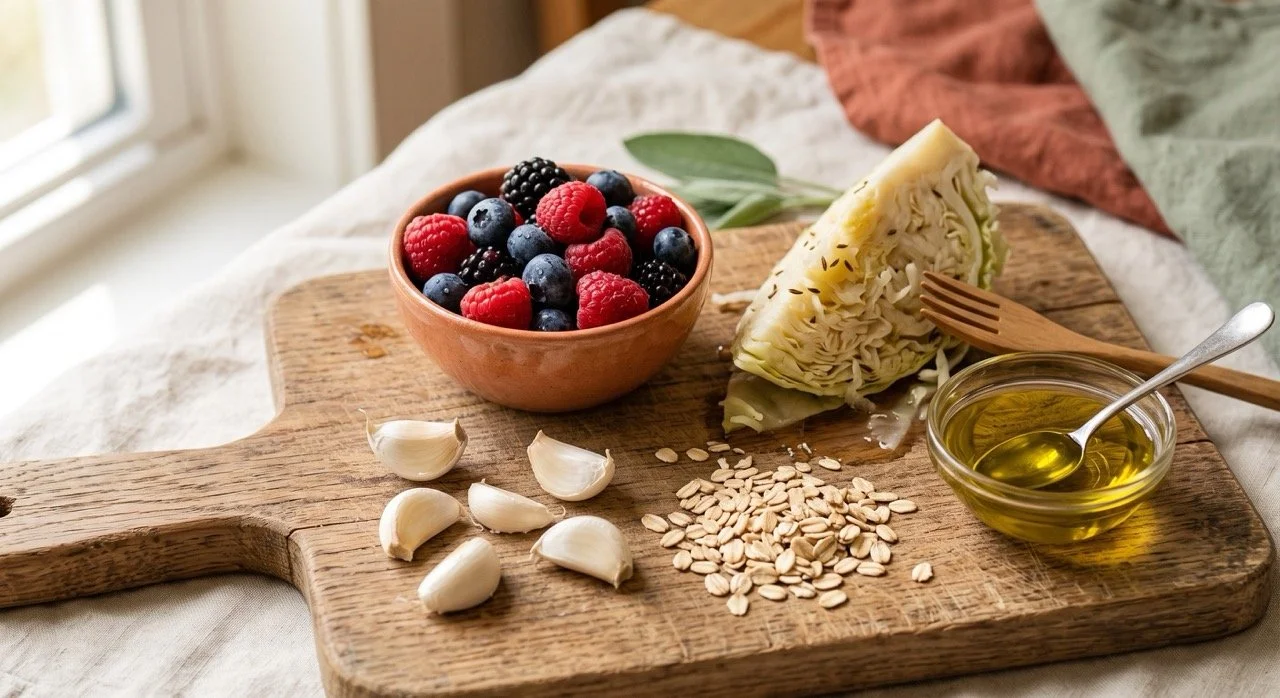
Do you ever stand in the grocery aisle wondering whether the yogurt in your cart is actually doing anything for your gut, or scroll past another "superfood" list unsure what is worth buying? The best foods for gut health are not a handful of exotic ingredients. They are a wide, varied mix of fiber-rich plants, fermented foods, and polyphenol-rich produce that feed and diversify the trillions of bacteria living in your digestive tract.
Diversity is the key word here. Researchers behind the American Gut Project found that people eating 30 or more different plant foods a week carried significantly more diverse gut microbiomes than people eating 10 or fewer, and microbial diversity is one of the strongest markers of a resilient, well-functioning gut. This piece walks through the three food categories with the best evidence behind them, plus what tends to crowd gut health out, so you can build a gut-friendly plate without needing a nutrition degree. None of it requires an expensive supplement cabinet. Most of the highest-impact changes are sitting in the produce aisle and the refrigerated section you already walk past.
Feed Diversity With Fiber and Plants
Why variety beats "clean eating"
Every plant fiber feeds a different set of bacteria, so eating the same five healthy foods on repeat mostly feeds the same narrow slice of your microbiome. Widening your plant variety does more for gut diversity than following any single diet label. The American Gut Project, one of the largest citizen-science microbiome studies ever run, found this pattern directly: variety, not virtue, was what separated the most diverse guts from the least diverse ones. The effect held regardless of whether someone ate meat, so a vegetarian eating the same 10 plants all week did no better than an omnivore doing the same.
Prebiotic foods that feed good bacteria on purpose
Some plants contain fiber types that gut bacteria particularly favor, known as prebiotics. Build meals around a rotating handful of these:
Garlic, onions, and leeks — rich in inulin, a fiber that selectively feeds beneficial bacteria such as Bifidobacteria.
Asparagus and Jerusalem artichokes — concentrated sources of that same inulin family.
Slightly green bananas — contain resistant starch, a fiber that survives digestion intact until it reaches the colon.
Oats and other whole grains — deliver beta-glucan fiber, which studies tie to a more diverse and more stable gut bacterial community.
Lentils and chickpeas — combine fiber with plant protein, feeding bacteria while keeping you full longer.
What that fiber is actually doing once it is inside you
When gut bacteria ferment fiber, they produce short-chain fatty acids, including butyrate, which is the primary fuel source for the cells lining your colon. Research on short-chain fatty acids shows they reinforce the gut barrier, calm inflammation, and support regular, comfortable digestion — the same barrier-repair work involved in healing a leaky gut naturally.
Imagine this: you swap your usual white toast for a bowl of oats topped with a sliced banana and a spoonful of ground flax. That one substitution adds three fiber types to your week that your gut bacteria have not seen from you in a while, without adding a single supplement.
The fastest way to know whether your gut is actually keeping up is to measure where it stands today.
Take our FREE assessment to measure the health of your Gut Microbiome
Fermented Foods for Live Cultures
The evidence behind fermented foods
Fermented foods carry live bacterial cultures that can temporarily populate your gut and interact with your existing microbiome. A closely watched ten-week Stanford study found that a diet high in fermented foods steadily increased participants' microbiome diversity and lowered several inflammatory markers, while a high-fiber diet alone did not move diversity in that same short window. That does not mean fiber does not matter. It means fermented foods and fiber work through different mechanisms, and a gut-healthy plate benefits from both rather than picking one.
The best fermented foods to start with
Plain yogurt and kefir — dairy ferments carrying strains such as Lactobacillus and Bifidobacterium, with kefir typically containing the broader range of the two.
Sauerkraut and kimchi — fermented vegetables rich in lactic acid bacteria. Choose unpasteurized versions from the refrigerated section, since pasteurization kills the live cultures.
Miso and tempeh — fermented soy foods that double as a plant protein source.
Kombucha — a fermented tea carrying live cultures, though it also brings some sugar and caffeine worth factoring into your day.
A review of the research on fermented foods and the microbiome notes that consistency beats quantity: a small daily serving tends to move your gut further than one large serving eaten occasionally.
A caution worth knowing
Fermented foods are not automatically the right starting point for everyone. Fermentation naturally raises a food's histamine content, so people managing histamine intolerance often need to introduce fermented foods slowly and in small amounts. And because SIBO involves bacterial overgrowth higher up in the small intestine, some people working through it feel worse, not better, on a heavy fermented-food diet until the overgrowth itself is addressed. If a food you added "for your gut" is making you feel worse, that is real information about your particular gut, not a sign you are doing it wrong.
Imagine this: someone reads that kimchi is a gut superfood, adds a large serving to lunch every day, and starts feeling more bloated, not less, within a week. The food was not the problem. The dose and their starting point were. Two forkfuls a few times a week, added slowly, often gets someone the same benefit without the flare.
Live cultures are only useful if they are the right strains at the right dose for what your gut actually needs.
Here is a link to our most trusted and recommended Probiotics!
Polyphenols, Healthy Fats, and What to Limit
Polyphenol-rich foods
Polyphenols are the plant compounds behind deep color, and gut bacteria convert many of them into byproducts your body can actually use.
Berries — carry anthocyanins that gut bacteria convert into metabolites supporting beneficial species such as Faecalibacterium.
Green tea — its catechins encourage Bifidobacteria while discouraging some less helpful strains.
Extra virgin olive oil — carries polyphenols tied to a calmer, less inflamed gut lining.
Broccoli and dark leafy greens — bring fiber and polyphenols together in the same bite.
Coffee — shows up in multiple large population studies as one of the more consistent predictors of a more diverse gut, independent of caffeine intake.
Research on polyphenols and the gut microbiome shows these compounds act almost like a second food source for your bacteria, shaping which strains have the advantage.
Omega-3s and the microbiome
Fatty fish such as salmon, sardines, and mackerel supply omega-3 fatty acids that one large study of women found were directly correlated with greater microbiome diversity, independent of how much fiber the women ate. If fish is not part of your routine, an algae-based omega-3 supplement is a reasonable substitute worth discussing with a practitioner.
What crowds out gut health
Every gut-supporting food you eat is competing for space on your plate with something else, and a few categories consistently work against diversity:
Ultra-processed foods — research shows heavy reliance on packaged, additive-dense foods is linked to lower microbial diversity and a thinner, more permeable gut barrier, echoing what happens with certain food additives and preservatives.
Red and processed meat in excess — tied in multiple studies to a less favorable bacterial balance, particularly when it crowds out plant foods rather than sitting alongside them.
Refined grains and added sugar — strip out the fiber that would otherwise feed your bacteria, leaving mostly quick-burning carbohydrate behind.
Alcohol in regular, heavier amounts — irritates the gut lining and can shift bacterial balance in a less favorable direction over time.
None of this makes these foods forbidden. It means your gut notices what fills most of your plate most of the time, not what you eat once in a while.
Where to Start
You do not need to overhaul your kitchen this week to move the needle. Add one new plant food you do not usually buy — a bag of frozen berries, a can of chickpeas, a bulb of garlic. Add a small daily serving of a fermented food if your gut tolerates it, and pay attention to how you feel. Swap one refined-grain meal for a whole-grain one. Small, repeated choices compound, and gut bacteria respond faster than most people expect, often within a couple of weeks.
If you have been eating "healthy" by the usual rules and still feel bloated, tired, or foggy, the missing piece is often not willpower. It is a clearer picture of what your gut and your mood-related gut-brain signaling actually need, which is where working alongside someone who can look at your whole picture helps.
If your gut has not responded the way you expected even after cleaning up your diet, a closer look often finds what a food list alone cannot.
Interested in working with a Gut Specialist? Book with one of our team members to see how we can come alongside you.