Can Blue Food Coloring Cause Diarrhea?
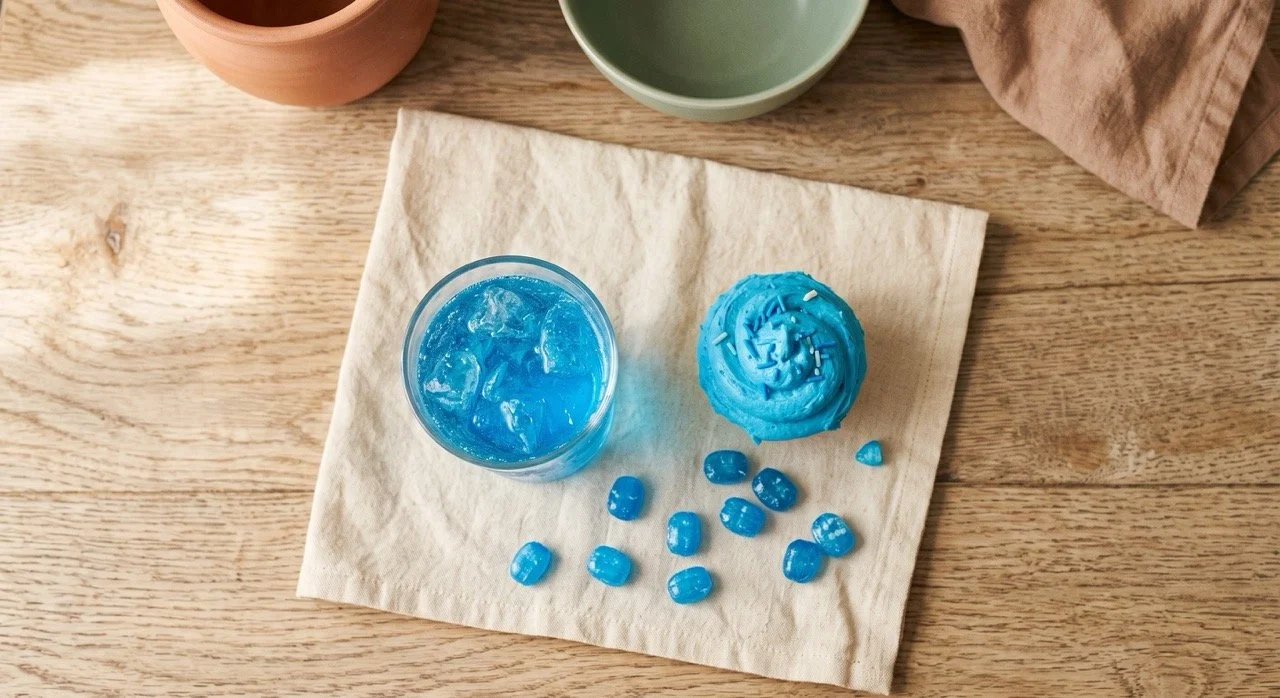
You finished a bright blue slushie, a blue sports drink, or a slice of cake with electric blue frosting, and an hour or two later your stomach is cramping and you are running for the bathroom. Now you are staring at the ingredient list, wondering whether that vivid blue color is what sent your gut into a tailspin. So can blue food coloring cause diarrhea?
The honest answer: for most people, the blue dye itself is an unlikely direct cause of diarrhea, but it is not always innocent either. A minority of people are genuinely sensitive to synthetic dyes and react with digestive upset. Just as often, the real trigger is what the blue is riding along with, such as a load of sugar, sugar alcohols, or an ultra-processed mix your gut struggles with. Blue coloring can also make a bowel movement look alarming without doing any harm at all. This piece separates the dye from its company so you can see what is actually happening in your gut.
Can the Blue Dye Itself Cause Diarrhea?
What blue food coloring actually is
Almost every blue food or drink in the United States gets its color from one of two synthetic dyes. Blue 1, also called Brilliant Blue FCF, is the bright, slightly greenish blue in sports drinks, candy, frostings, and cereal. Blue 2, also called Indigotine or Indigo Carmine, is a deeper blue used in baked goods, snack foods, and confections. Both are approved by the U.S. Food and Drug Administration as certified color additives, which means every batch is tested and certified by the FDA before it can be used in food. Approved for general use is not the same as gentle on every gut, though, which is where individual differences come in.
Why most of it never gets absorbed
Here is the part that surprises people: blue food coloring is designed to color food, not to be digested. Most of a dose of Blue 1 passes straight through your digestive tract without being absorbed into your bloodstream, which means the lining of your gut and the bacteria living there get the most direct exposure. A 2025 laboratory study published in ISME Communications used a simplified model of the gut microbiome to test what brilliant blue does to gut bacteria, and found it shifted the community, lowering beneficial species such as Bifidobacterium longum and reducing production of butyrate, a short-chain fatty acid that helps keep the gut lining calm and well-fed. Notably, some of those changes lingered even after the dye was removed.
Keep this in perspective. That was a lab model, not a human trial, so it shows a plausible mechanism rather than proof that a blue drink will upset your bowels, and the amounts reaching your gut in everyday eating are small. Still, it explains why a dye that is barely absorbed can affect digestion at all: your gut and its microbes are the ones meeting it head-on.
Who actually reacts to it
Sensitivity to synthetic dyes is real but uncommon, and it varies widely from person to person. A few patterns show up most:
People with sensitive or reactive guts — those with irritable bowel syndrome or a history of food intolerances are more likely to notice cramping, gas, or loose stools after dyed foods, because their digestive tract is already easily provoked.
People eating a large concentrated dose — a single blue candy is trivial, while a giant blue slushie plus blue candy plus blue frosting at a party stacks up far more dye and everything it comes with.
Children — smaller bodies reach a higher relative exposure from the same serving, and kids tend to be the biggest consumers of brightly colored treats.
Imagine this: two friends split the same blue sports drink. One feels fine. The other, who lives with IBS, is bloated and rushing to the bathroom within the hour. Same drink, same dye, very different guts. That difference is the whole story with food dye and diarrhea: the trigger is rarely the dye alone, it is the dye meeting a gut that is primed to react.
If you keep reacting to foods and cannot pin down why, it helps to know where your gut stands before you start guessing.
Take our FREE assessment to measure the health of your Gut Microbiome
What the Blue Dye Is Riding Along With
When a blue food sends you to the bathroom, the coloring often gets the blame simply because it is the most visible ingredient. Look one line down on the label, though, and you usually find the more likely culprits.
Sugar and the osmotic pull
Most brightly blue drinks and treats are also loaded with sugar, and sugar has a well-known effect on the gut. When a very sweet, concentrated drink hits your small intestine, your body pulls water into the gut to dilute it, a process called an osmotic effect. More water in the intestine means looser, faster stools. A large blue sports drink or slushie delivers that sugar hit and the coloring at the same moment, so the diarrhea people notice may be the sugar doing what sugar does, with the blue along for the ride.
Sugar alcohols in "sugar-free" blue products
The opposite version of the same problem shows up in blue products marketed as sugar-free or low-calorie: sugar-free gum, blue hard candy, and diet drinks. These are often sweetened with sugar alcohols such as sorbitol, xylitol, or erythritol, which the small intestine absorbs poorly. What is not absorbed pulls water into the gut and then ferments in the colon, producing gas and loose stools. A scientific review of sugar alcohols and gastrointestinal symptoms describes exactly this laxative effect, and older research on sorbitol intolerance found that as little as 5 to 10 grams can cause symptoms in sensitive people, with 20 grams or more commonly triggering diarrhea. That is easy to reach with a handful of sugar-free candies.
The ultra-processed package
Blue foods also tend to be ultra-processed, so the dye arrives packaged with emulsifiers, preservatives, artificial sweeteners, and very little fiber. For a gut that is already struggling, that whole combination is harder to handle than any single ingredient. When you react to a blue treat, you are usually reacting to the entire package, not to the pigment in isolation.
Example: a blue sports drink upsets your stomach through sugar and volume, while a "sugar-free" blue candy upsets it through sorbitol. Both look blue, both cause diarrhea, and neither one is really a dye problem. Learning to read past the color is what tells you which lever to pull.
If you want to understand how these everyday foods act on your gut lining and microbiome, start with the fundamentals.
Interested in learning more about how the gut works? Download our FREE Leaky Gut Webinar
Blue Stools, Fast Transit, and When to Pay Attention
Blue in the toilet is not the same as harm
One reason blue coloring gets blamed for diarrhea is that it is easy to see on the way out. Blue and green-tinged stools after a blue drink are usually just unabsorbed dye passing through, not a sign of damage. In fact, researchers use exactly this trait as a tool. A 2021 study in the journal Gut had people eat blue muffins and timed how long the color took to appear in their stool as a simple, reliable marker of gut transit time. The median was close to 29 hours, and faster transit tended to track with looser stools. So if blue shows up quickly and your stool is loose, the color is telling you that things moved fast, not that the dye harmed you.
When diarrhea is really about your gut, not the dye
If a blue food seems to set you off every time, it is worth asking whether the dye is exposing an underlying gut issue rather than causing a new one. A few common backdrops:
A compromised gut lining — when the barrier is inflamed or overly permeable, foods that a healthy gut shrugs off can provoke symptoms. This is the picture people mean by a leaky gut, and it makes the gut more reactive to many additives, not just dyes.
An imbalanced or overgrown microbiome — conditions like SIBO leave the gut fermenting and reacting to foods that should be uneventful, so a sugary blue drink can hit harder than it would in a balanced gut.
General sensitivity to synthetic additives — dyes are frequently on the list of things people remove during an elimination approach, which is covered in more depth in why food dyes can be hard on your stomach.
How to tell if blue dye is really your trigger
You do not need a lab to test this at home. A simple, methodical approach usually gives you a clear answer:
Track it — note what you ate, how much, and when symptoms started. A pattern that only appears with large, sugary, or sugar-free blue foods points away from the dye and toward the sugar or sugar alcohol.
Swap, do not just remove — try the same treat colored with natural options such as spirulina, butterfly pea flower, or red cabbage and see whether the reaction disappears. If it does, the synthetic dye may genuinely be your issue. If it does not, look at the sugar and sweeteners instead.
Change one thing at a time — removing every suspect at once tells you nothing about which one mattered. Isolate the dye, then the sugar, then the sugar alcohol.
Where to Start
If a blue food gave you diarrhea once, there is usually nothing to worry about, and the color is rarely the whole story. Start by looking past the pigment: check whether the item was heavy on sugar or sweetened with sorbitol and similar sugar alcohols, since those are far more reliable causes of loose stools than the dye. Notice whether blue foods only bother you when the serving is large or when your gut is already off. And if you want to know whether the coloring itself is a trigger, swap in a naturally colored version and compare.
If blue foods, and plenty of other foods, keep upsetting your stomach no matter what you do, that is a sign the conversation is bigger than one dye. A gut that reacts to many things is usually asking for attention to the lining and the microbiome underneath, and that is worth looking at with someone who can see your whole picture.
If food reactions have become a moving target, a closer look at your gut often finds what an ingredient list cannot.
Interested in working with a Gut Specialist? Book with one of our team members to see how we can come alongside you.