Natural Food Coloring Alternatives That Are Easier on Your Stomach
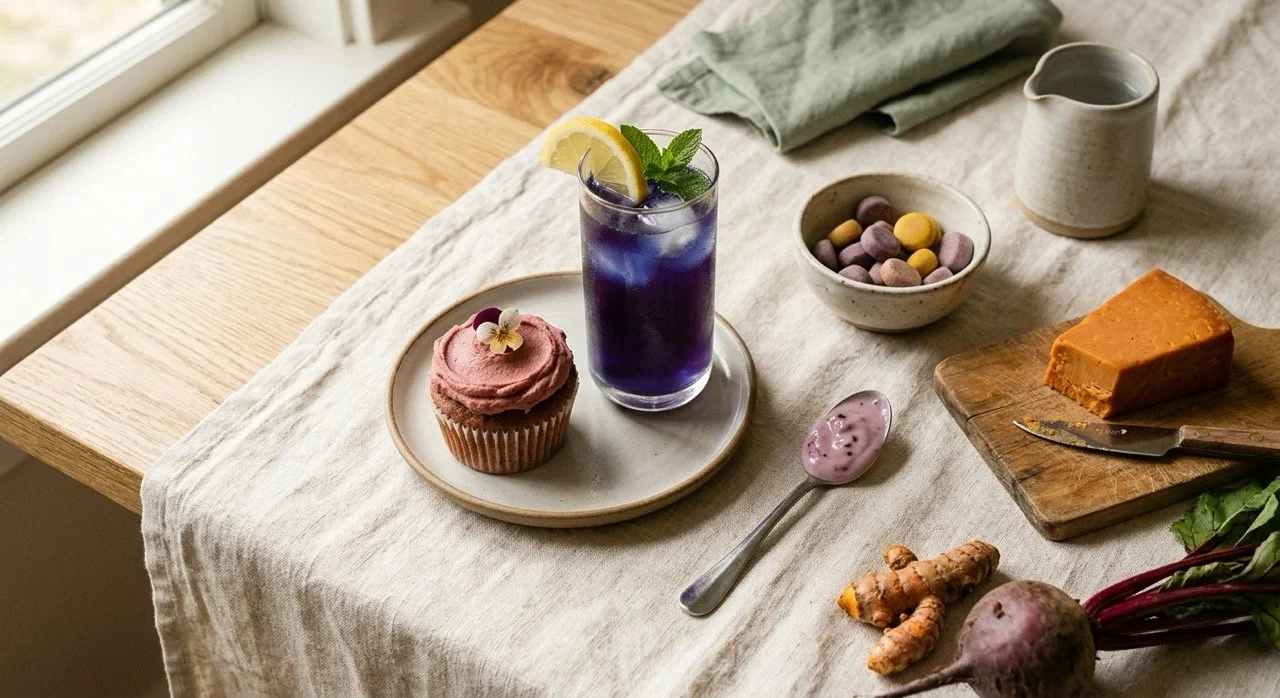
You have already done the hard part. You read the label, you put back the box with Red 40 in it, and you picked up the one that says colored with vegetable juice instead. Then, two hours later, the same cramping and urgency shows up anyway, and you are left wondering whether the swap did anything at all.
Here is the direct answer: the natural food coloring alternatives that are genuinely easier on your stomach are the ones that come from a whole food you could eat on its own, in an amount your gut already handles. Purple carrot, red cabbage, blueberry, beet, and paprika sit at the gentle end. Annatto and carmine sit at the reactive end, even though both are technically natural. Sorting colorants by how your gut actually meets them is more useful than sorting them by whether they came from a plant.
The Natural Colorants Most Guts Handle Well
The gentlest colors share a pattern. They are pigments pulled from foods people already eat by the cupful, they arrive with the plant's own compounds attached, and they are used in tiny amounts. Nothing about them is new to your digestive tract.
Anthocyanins: the pigments your microbes actually use
Anthocyanins are the red, purple, and blue pigments in blueberries, blackberries, purple carrot, red cabbage, elderberry, and black currant. They are the most common natural colorants in the reformulated products now replacing synthetic dye, and they are the only color family with a plausible case for being good for your gut rather than merely neutral.
Purple carrot and red cabbage: the workhorses behind most pink, purple, and violet in clean-label candy, yogurt, and frosting.
Berry concentrates: blueberry, blackberry, and elderberry, usually in beverages and baked goods.
Butterfly pea flower extract: a true blue the FDA approved in May 2025 for drinks, yogurt, candy, ice cream, and cereal coatings, alongside two other color additives drawn from algae and minerals.
Anthocyanins are polyphenols, which means your gut bacteria ferment them. In a controlled animal feeding study, anthocyanin-rich foods shifted the gut microbiome within 24 hours of exposure, raising bacterial families associated with mucus-layer maintenance and lowering families that include opportunistic pathogens. Those shifts faded within about a week once the food was withdrawn, and the work was done in mice rather than people, so it is not a promise about your digestion. It does mean these pigments are food to your microbes rather than something foreign passing through.
Beet, and the red-in-the-toilet surprise
Beet juice and beet powder give reds and pinks and are among the best-tolerated colorants. The one thing worth knowing ahead of time is cosmetic rather than harmful. Beets carry a pigment called betanin that not everyone fully breaks down, and Cleveland Clinic notes that roughly 10 to 14 percent of people see red or pink urine after eating them, with reddish stool being even more common. Low stomach acid makes it more likely, because more pigment survives the stomach and lands in the colon.
Imagine this: you drink a beet-colored smoothie on Tuesday, see alarming color Wednesday morning, and spend the day worried about bleeding. Knowing the pattern in advance saves the panic. Color from beets clears within a day or two. Color that shows up without beets, or persists past 48 hours, is worth a call to your provider.
The quiet middle: paprika, carrot, and spirulina
Paprika covers orange and warm red, beta-carotene from carrot handles yellow-orange, and spirulina extract supplies blue-green. All three are used in amounts far below what anyone would eat as food, and reports of digestive reactions are uncommon. Turmeric belongs here too when it is used as a colorant, which is a very different amount than a turmeric supplement.
If your reactions to food have started outrunning your ability to explain them, it helps to see where your gut actually stands.
Take our FREE assessment to measure the health of your Gut Microbiome
The Natural Colorants That Still Bother Sensitive Stomachs
Natural does not mean inert. A few plant and insect pigments provoke real reactions in a real slice of the population, and one of them is more reactive than the synthetic dyes it replaces. If you have already switched away from the synthetic dyes that are hard on your stomach and something still is not sitting right, these are the three to check.
Annatto: the one that catches people off guard
Annatto comes from the seeds of a tropical shrub and colors cheddar, butter, snack foods, cereals, and drinks a yellow-orange. It is the natural colorant most likely to cause trouble. The Center for Science in the Public Interest rates it "certain people should avoid" and notes that allergic reactions to annatto appear to be more common than reactions to commonly used synthetic food dyes. Documented responses range from hives and swelling to gastrointestinal upset, and a published case report describes anaphylaxis to annatto dye. Reactions also tend to arrive later than they do with synthetic dyes, which makes them harder to connect back to the food.
Carmine and cochineal: the red from an insect
Carmine and cochineal extract are deep reds made from a scale insect. They color juices, yogurt, candy, and artificial crab, and have been linked to reactions ranging from hives to anaphylactic shock in medical literature going back to 1961. The FDA took this seriously enough to require that both be named specifically on the ingredient list rather than hidden inside "artificial color." The agency stopped short of calling them major food allergens, though, so they never appear in the bold "Contains" line. You have to read the ingredients themselves.
Turmeric at supplement strength
A pinch of turmeric coloring rice is not the same thing as a concentrated curcumin capsule. In clinical trials, high-dose curcumin has produced diarrhea and nausea in some participants, and the Linus Pauling Institute notes that curcuminoid supplements taken on an empty stomach may cause gastritis and peptic ulcer disease. Turmeric as a spice and color additive is generally recognized as safe. The dose is what changes the picture, which is a useful reminder that "it is just a plant" settles nothing on its own.
If foods that seem harmless keep provoking flushing, headaches, loose stools, or hives, the pattern may not be about color at all. Histamine intolerance produces a strikingly similar picture and is easy to mistake for an additive reaction.
When symptoms keep moving between foods, testing usually finds the pattern faster than another round of elimination.
Curious how Functional Labs can improve Gut Health? Download this case study
How to Choose Well When the Label Says Natural
Ingredient labels are getting better and vaguer at the same time. A few habits keep you oriented.
Read for the plant, not for the word
A colorant that names its source, such as beet juice concentrate, purple carrot juice, or paprika extract, tells you what you are eating. A phrase like "colored with natural sources" tells you almost nothing. The gap matters more than it used to. In February 2026 the FDA approved beetroot red as a color additive, and objections followed almost immediately because the pigment is produced by genetically engineered yeast rather than pressed from beets. The agency delayed the effective date in March 2026 while it works through those objections, including a complaint that residual yeast proteins could affect people with yeast sensitivities. Same word on the front of the box, different molecule in your gut.
Quality varies more than category
Within a single colorant, sourcing does most of the work. Spirulina is the clearest example. It is widely used and generally well tolerated, but commercial spirulina products have repeatedly been found contaminated with cyanotoxins called microcystins, because spirulina is often grown in open ponds where toxin-producing cyanobacteria can move in. The FDA is amending its own spirulina extract order to tighten heavy-metal specifications. None of that makes spirulina a colorant to avoid. It makes third-party testing the thing to look for, especially if you are also taking it as a supplement.
Color your own food and skip the question
The most reliable way to know what is in the color is to add it yourself, and the kitchen versions are unremarkable:
Pink and red: beet powder, freeze-dried strawberry or raspberry powder.
Yellow and orange: turmeric for gold, carrot juice or paprika for orange.
Green: matcha, or spinach blitzed and strained.
Blue and purple: butterfly pea tea, blueberry powder, or red cabbage water, which turns blue with a pinch of baking soda and pink with a squeeze of lemon.
These are the same trades that show up in a practical guide to swapping dyed foods, and they double as a small chemistry lesson if you have kids at the counter. Homemade colors are softer and less stable than commercial ones, which for most families is a fine trade.
Where to Start
You do not need a spreadsheet of pigments. Start by scanning for the two names most likely to cause a problem, annatto and carmine or cochineal extract, since both must be printed plainly. Then give anthocyanin-based colors, beet, and paprika the benefit of the doubt, and lean on foods whose color was never added in the first place, which is the same short list of foods that support gut health generally.
If symptoms hold steady after all of that, color is probably not the driver. Persistent bloating, urgency, or reactions that spread across more and more foods usually point toward something upstream, such as an irritated gut lining, a thin microbiome, or low stomach acid changing how you handle everything you eat. That is a solvable problem, and a better use of your energy than auditing one more ingredient list. The reason your list of safe foods keeps shrinking is rarely the newest thing you removed.
If the list of foods you react to keeps growing, the answer is usually upstream of any single ingredient.
Interested in working with a Gut Specialist? Book with one of our team members to see how we can come alongside you.